

Imagine arriving at a Run Free field with your dog. The gate opens and they’re off, ready to explore. Perhaps they’ll head straight for the play equipment, investigate an interesting smell or chase a ball across the grass.
To us, it might look like a straightforward play session. But your dog is experiencing the field in a very different way. Their senses are constantly gathering information, helping them understand their surroundings and decide what to do next.
We tend to think of the five familiar senses: sight, hearing, smell, taste and touch. Dogs use all of these, but some work rather differently from ours. They also have other sensory systems that help them understand where their body is and how it’s moving.
Let’s take a closer look at what your dog might be experiencing during a visit to the field.
First impressions: seeing the field
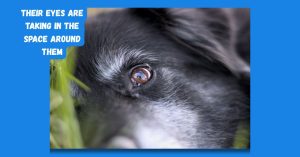
As your dog enters the field, their eyes are taking in the space around them. They might spot the play equipment, notice movement in the distance or see you getting a ball ready.
But dogs don’t see colours in quite the same way we do. Humans have three types of colour-detecting cone cells in their eyes, while dogs have two. This means dogs see blues and yellows particularly well, but have difficulty distinguishing between reds and greens. A red ball on green grass, for example, may not stand out to your dog in the same way it does to you. That doesn’t mean they can’t find it. Dogs are particularly good at detecting movement, so a ball rolling or bouncing across the field is likely to catch their attention.
Their eyes are also adapted to work well in lower light. Dogs have more light-sensitive rod cells than humans, and a reflective layer behind the retina called the tapetum lucidum. This helps them make better use of available light, although it doesn’t give them true night vision.
Ears pricked: what can they hear?
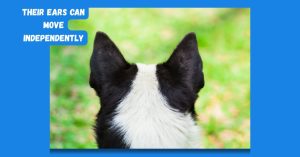
Dogs can hear higher-pitched sounds than humans. Our upper hearing range is generally around 20,000 Hz, but dogs can hear frequencies of up to approximately 45,000 Hz. Their ears can also move independently, helping them to pick up sounds from different directions and work out where a noise is coming from.
Think about what your dog might hear during a field visit: birds calling, leaves rustling, distant traffic or another dog barking. Some of these sounds may be barely noticeable to us, but your dog could be paying close attention. You might even notice your dog suddenly stop and prick up their ears. They may have heard something you haven’t noticed at all.
Nose down: a world full of smells
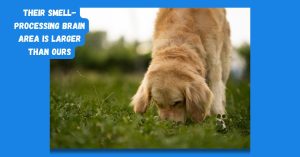
Your dog might spend several minutes investigating one particular patch of grass. To you, it looks like they’re doing very little. To them, there’s a whole world of information to explore.
Dogs have an extraordinarily sophisticated sense of smell. Their noses contain a large number of specialised scent receptors, and the part of their brain devoted to processing smells is proportionally much larger than ours. They can use scent to gather information about their surroundings, including the presence of other animals and things that have happened before they arrived.
Dogs also have a secondary scent-detection system called the *vomeronasal organ*, sometimes known as Jacobson’s organ. It’s located just above the roof of the mouth, behind the front teeth, and detects chemical signals, including pheromones, which can provide information about other animals.
This helps explain some of those rather curious behaviours we see in dogs! When they find something particularly interesting, such as another dog’s urine, they may lick it or use their tongue to help transfer chemical substances towards this organ. You might even notice their teeth chattering or a rather unusual expression as they investigate. Next time your dog seems fascinated by something you’d really rather they weren’t licking, they may be doing more than simply having a taste!
Scents gradually change and fade over time, but some dogs can still follow trails that are hours old. So that interesting smell could tell your dog something about another animal that has visited the field, even if it has long since left. It’s a bit like reading the local news, except your dog is doing it with their nose!
Climbing, balancing and exploring: the importance of touch
A dog’s sense of touch is about much more than feeling something against their skin. It’s also closely connected to how they move and understand their own body.
Their paws contain sensory receptors that detect pressure, vibration and contact with different surfaces. Their skin has receptors that respond to touch, temperature and pain, constantly sending information to the brain.
Then there’s proprioception, sometimes described as body awareness. Specialised receptors in muscles, tendons and joints tell the brain where different parts of the body are and how they’re moving. This helps a dog judge where to place their paws, negotiate obstacles and adjust their movements. Their sense of balance, controlled by the vestibular system in the inner ear, works alongside proprioception. Together, these systems help a dog stay steady, coordinate their movements and adapt when their position changes.
So when your dog climbs on to play equipment, steps over an obstacle or balances on a raised platform, there’s a lot going on behind the scenes. They’re constantly processing information and making tiny adjustments to get their body where they want it to be.
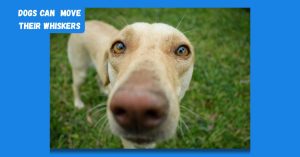
And let’s not forget those whiskers! These specialised hairs around the muzzle have highly sensitive follicles packed with nerve endings. They help dogs detect nearby objects and subtle movements around their face, particularly when something is close enough that vision alone isn’t giving them all the information they need.
Dogs can also move their whiskers, pushing them forwards when they’re particularly interested in something. You might notice this when they’re investigating an unfamiliar object.
Time for a treat: how does taste work?
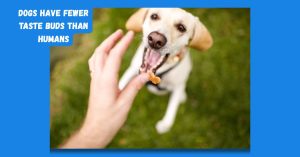
Perhaps your dog has earned a treat after all that exploring. But how does their sense of taste compare with ours? Dogs have fewer taste buds than humans, and their sense of taste is less developed. However, they can detect several familiar taste categories, including sweet, sour, salty and bitter.
Taste and smell work closely together. Much of what we experience as flavour actually comes from our sense of smell, and the same is true for dogs. So when your dog eagerly investigates a treat before eating it, their nose is already helping them decide whether it’s worth having!
Something else to explore: do dogs have a sixth sense?
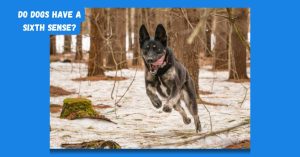
There’s one more intriguing possibility that scientists have investigated: the ability to detect the Earth’s magnetic field.
A study, published in 2020, investigated how hunting dogs found their way back to their owners through woodland. At the start of some return journeys, dogs made a short run along a north-south axis, regardless of the direction they needed to travel. Researchers suggested this might help them orient themselves using the Earth’s magnetic field.
It’s fascinating, but the evidence is still limited and the exact mechanism isn’t fully understood. We can’t say for certain that dogs use a magnetic sense in everyday life. It’s still an interesting reminder that there may be more to a dog’s sensory world than we currently understand.
One field, two very different experiences
By the time your dog has finished exploring, chased a ball, investigated some interesting smells and had a go on the play equipment, they’ve taken in an extraordinary amount of information.
Their eyes have detected movement, their ears have picked up sounds, their nose has investigated scents and their tongue has sampled a treat or two. Meanwhile, their brain has been combining information from their paws, muscles and joints to help them move around.
And all of this happens alongside the excitement and enjoyment of having space to explore.
We’re sharing the same field but experiencing it in very different ways. Next time you visit Run Free, take a moment to watch what your dog is doing. You might see an ordinary trip to the field in a whole new light.
Ready to let your dog enjoy the freedom to run?
Book a Run Free Field: www.run-free.link/book
Looking for more tips and advice?
Read Our Other Blogs: www.run-free.link/blog